Showing posts with label travel. Show all posts

Wednesday, 14 August 2013

Dodging hipsters in Portland and being Beat in Big Sur

Earlier this summer, I spent a few weeks in the US visiting family in Portland, Oregon and Santa Cruz, CA. I've been to California a number of times but it was my first time visiting Oregon.

Portland is rainy (even in June) and full of hipsters but has great coffee, tonnes of food carts serving cheap and tasty food, lots of beautiful scenery and a book shop that occupies an entire city block- what more could one want?! Portland is known for its craft beers but despite my best efforts, I didn't get to sample as many as I would have liked! I did try some Oregon wine though, which was really good. The Oregon coast is also beautiful and I loved the countryside driving north towards Washington.


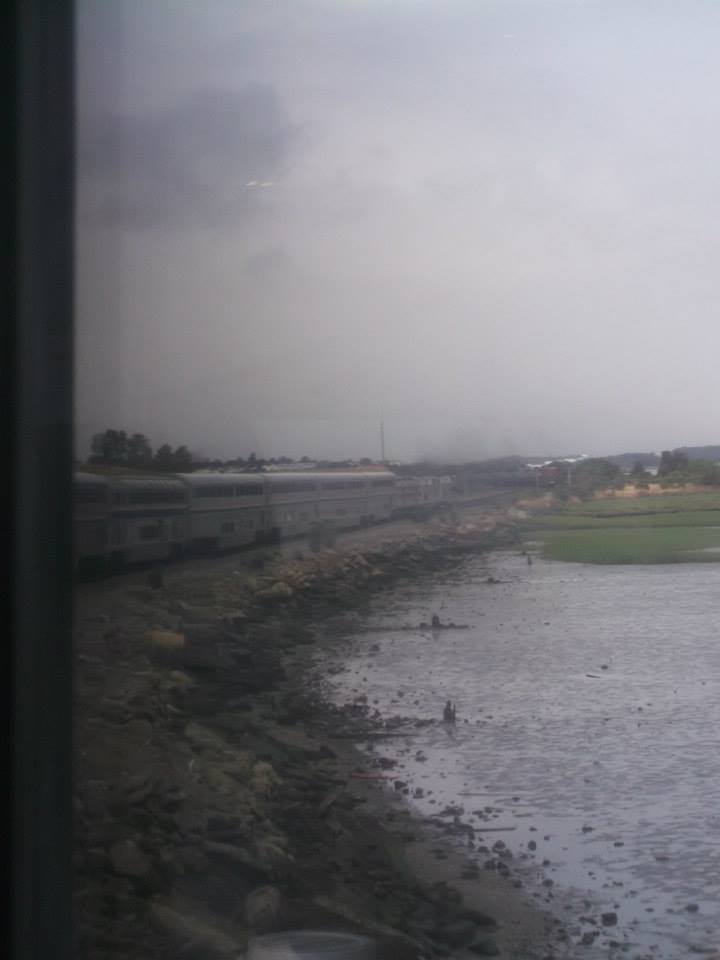
I took the train from Portland to San Jose- 22 hours on the Amtrak Coast Starlight. It was a gorgeous way to travel, slow but comfortable with amazing scenery along the way. Going by train always feels like a more romantic way of travelling. I've loved long train journeys since I was 17 and flew into Warsaw then boarded a train across the Belorussian border to Brest. The Coast Starlight has a viewing carriage with floor to ceiling windows and the economy carriages were extremely comfortable. It was cheaper than flying and a much more enjoyable way of travelling. 


I stayed with my aunt in her beautiful home in the Santa Cruz Mountains. Although we did a lot for the three weeks or so I was there- hiking in the Redwoods, visiting San Francisco, walking along the coast in Santa Cruz, driving down to Big Sur- most days I was quite content to just lie out on the deck. .

. . . I know, it's hard to imagine why!

Santa Cruz is one of my favourite places on earth and San Francisco is a great city but the highlight of the trip for me was driving down the coast to Big Sur. It was simply amazing. Bizarrely, the countryside reminded me of the West of Ireland at times, with the yellow and red flowers in the rolling hills- and of course the grey skies!


We also visited Berkeley; there's some amazing views from the top of the campus right across the Bay. 


We spent 4th of July in San Francisco and I visited the Beat Museum for a second time. I first went when I was 16 and obsessed with Jack Kerouac. Now, I prefer the overlooked female Beat writers who lacked the freedom and recognition of their male counterparts. The Beat Museum is small but well worth a visit, with a great gift/book shop. They also pay due recognition to the many women Beat writers. I love this quote from Gregory Corso.


I had an amazing time and managed to do it all on an extremely small budget, staying with family and flying standby (my father works for an airline). Overall, I spent less for a month in America than I did for two weeks in Northern Spain two years ago! 


Wednesday, 31 July 2013

On being a Western harlot in other countries

There was worldwide shock and outrage earlier this month at the news that a Norwegian woman who was allegedly raped in Dubai had been sentenced to prison for extramarital sex, consuming alcohol without a licence and perjury. Marte Dalev was charged with extramarital sex because under UAE law, she was not raped. Rape is not easy to prove in any legal jurisdiction. Under Sharia law however, a rape only occurs if it is witnessed by four adult Muslim men or if the rapist confesses. This makes it almost impossible to prove a rape occurred.

Dalev's story is unfortunately not an isolated case. Australian Alicia Gali spent eight months in prison in 2008, after reporting being raped at the hotel where she worked. Her case was not widely publicised by her family, apparently due to advice from the Australian government. Dalev's case was barely reported in Gulf media outlets and when it was, it was mostly to express outrage at the evil Western media who were besmirching Dubai's good name. It was pointed out that Dalev was drinking and so was partly to blame if she was raped. The idea that a rape victim is to blame if she has been drinking is still prevalent here in Europe too, lest we forget.

Dubai, UAE

I'm moving to Oman next month, which has a similar, sharia-influence code of law to the UAE. I've seen calls to boycott Dubai as a holiday destination on Twitter and have been reading countless articles on this terrible case (Dalev's case was since suspended, thankfully). It's made me think a lot about travelling to countries which have laws I not only disagree with but actually abhor; laws which offer me little protection as a woman- especially a Western woman who likes a drink.

Some of my friends and family have questioned why I would want to live in a country such as Oman, especially as I am such a proponent of women's equality. I obviously don't see living there as condoning women's second class status but I am extremely interested in living in a completely different culture for a year and learning Arabic. In Uganda, I was lucky enough to meet some amazing Sudanese women. I hope to travel to Sudan sometime in the next two years. This is not because of their government's fantastic human rights policies or their heavily corrupted Public Order Laws but because I find Sudanese culture interesting and beautiful and Sudanese people friendly and warm. No one travels to a country because of governmental policy, you travel to see and experience new and different things. The things you see are not always good.


At the Gadaffi Mosque, Kampala in 2011. 


Dalev committed no crime. Her only mistake was to go to the Dubai police. As a resident of Abu Dhabi, it's surprising she was not aware of the UAE's draconian laws regarding rape. However, it is completely understandable that probably shocked and traumatised she automatically did what we European women are always taught to do if we are attacked; report it to the police.

Many young European women I've met who have travelled in Africa or the Middle East are unaware of the current political and legal situation of the countries they're visiting. In Uganda in late 2011, as Somali militants upped their terrorist activities in neighbouring Kenya, many people in Kampala became nervous they would soon strike Uganda. Discussing the situation in a typical expat bar,  I remember being shocked at a Dutch girl who scoffed at such an idea. She was completely unaware, having failed to adequately Google the country she was moving to, that just the previous summer, two suicide bombers had killed over 70 people in downtown Kampala.

Being aware of the laws in UAE would obviously not have protected Dalev against rape. However, knowing how rape is treated by the legal system there would have saved her some of the extra trauma she was forced to go through. As we all know, it doesn't matter where in the world you are as a woman or how careful you are- whether you're in jeans and a headscarf or a miniskirt, drunk or sober- rape happens. Stories like Dalev's does not stop me travelling to the countries I wish to visit but it certainly does remind me to know as much as possible about the country I am travelling to.

<a href="http://www.bloglovin.com/blog/4175749/?claim=cde85fz7cq2">Follow my blog with Bloglovin</a>

Friday, 7 September 2012

Language & Politics in Rwanda (and some sightseeing)


In August I spent ten days in Rwanda, ostensibly for work but I managed to squeeze in a couple of days of extracurriculars! Kigali surprised me- compared to Kampala, where I spent a few months last year, it's much cleaner, orderly and feels much safer. It's pretty light on tourist attractions and night life however. Apart from the excellent Genocide Memorial Centre and some good crafts markets, there's not much to see. There are a few decent restaurants and bars, but literally just a few! Still, it's a nice chilled city to spend a few days in. 


I sent one hideously uncomfortable night in Butare in the south, where I failed to find a decent dinner and had to barricade my room door at night (not the safest of towns) before heading east to Kibuye, on the shores of Lake Kivu.


Kibuye is beautiful. A flooded mountain valley, the lake is full of islands- soaring mountain tops which are often shrouded with mist. It's an amazing landscape. We trekked around the lake much of the first day and hired a boat on the second day.


When I didn't have my tourist hat on however, I was doing research on genocide memorialisation for the African Union Human Rights Memorial. We saw some genuinely impressive attempts at societal reconciliation but it was glaringly apparent that Rwanda is heading for trouble. Recovering from genocide is an inexplicably difficult process for any society and it's impossible to say what is the "right" way to do it. The path Rwanda has chosen is already proving problematic however. Everyone we spoke to refused to disclose their ethnicity, referring to themselves only as Rwandans. This isn't as impressive as it sounds however as it was almost always disingenuous. Startling economic growth might have temporarily made Rwanda the darling of Western donors (although that era has now expired) but it hasn't magically caused deep rooted tensions to dissipate. The political language used when memorialising the genocide is particularly worrying; the genocide itself is almost always referred to as the 'Tutsi genocide'. This exclusive language is indicative of a wider political mindset.

This isn't mere nitpicking. Introduced in 2010, Rwanda's Anti-Genocide law claims to stop genocide denial. Hard to argue with that, right? Except it has been used to target opposition politicians who have called for the thousands of Hutus who were killed in the immediate aftermath of the 1994 genocide -whether through reprisal killings or disease- to be memorialised. Calling for appropriate acknowledgement of other victims is not denying the genocide happened. But that is how it is viewed n Kagame's Rwanda- you are for us or against us.

Kagame is due to step down in 2017. He could change the constitution in order to remain or step down in accordance with the law, in which case the country could be plunged into uncertainty. I'm not an expert on Rwandan affairs by any means but the impression I got from being in the country was far from optimistic. Having spoken to journalists and human rights experts infinitely more intimate with Rwanda since my return, I am even more pessimistic about where the country is heading, if the current situation remains.

But anyway, politics aside, it was a good trip.